


GalleryVault ProKey: Hide Pics
4.81.20K Reviews
App Specs
- Version
- 3.1.0
- Updated On
- License
- $14.99
- Downloads
- 50,000+
- Developer
- GalleryVault Developer Team
- Categories
- Video Players & Editors
- Platform
- Android
Screenshots

 Analysis by AppCompare
When a phone is used by more than one person, privacy becomes less about secrecy and more about having clear personal space. A shared tablet on the kitchen counter, a family phone passed around during a trip, or a device that a child occasionally borrows can easily expose pictures, videos, audio files, and documents that were never meant for casual browsing. GalleryVault ProKey: Hide Pics is built for that particular problem. I found it most useful as a private storage layer inside the device, rather than as a complete replacement for a secure account system or a household file manager.
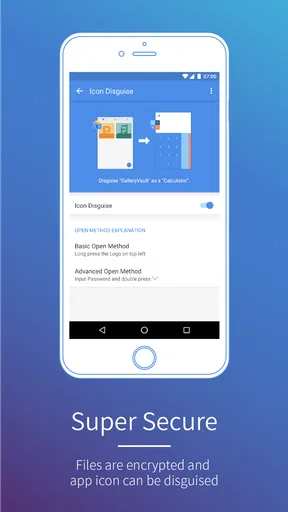
The app sits in the video players and editors category, although its practical role is broader because it handles several kinds of personal files. The GalleryVault Developer Team has kept the central idea straightforward: move selected material into a protected vault, make it less visible during ordinary phone use, and give the owner a quieter way to manage sensitive content. Its store short description is simply “GalleryVault,” but the actual appeal is the combination of hidden media, document support, SD card support, and a hidden app icon.
How GalleryVault ProKey fits into a shared household device
My first realistic use case is a household tablet that is not truly personal. One person may keep scanned paperwork on it, another may have private photos, and a third may use it for entertainment. In that situation, a normal gallery application is a poor boundary: anyone opening the gallery can usually browse everything stored there. GalleryVault ProKey: Hide Pics gives the owner a separate place to put selected files instead of relying on everyone to remember which folders are off-limits.
This is especially practical for a device used during travel or family events. I might want to keep copies of identification documents, booking files, or personal recordings on the phone while still letting someone else look through ordinary vacation pictures. The point is not that the vault makes a shared device magically private. It creates a deliberate step between everyday browsing and protected material, which is a meaningful improvement when several people handle the same screen.
The app also makes sense for people who keep work and personal material on one Android phone. A document that should not appear beside downloaded images, or a private video that would be awkward to reveal during a quick gallery handoff, can be moved into the vault. I would not treat that as a substitute for workplace security, but it is a useful separation for ordinary day-to-day situations.
One detail I appreciate is the support for more than pictures and videos. Audio files and documents can be hidden too, so the workflow is not limited to the usual “private photo” scenario. That broader file handling changes how I would organize it: instead of creating several obscure folders and hoping they remain unnoticed, I can keep a small collection of personal material in one purpose-built location.
What setup should look like before anyone else uses the phone
I would set up the vault before placing private files on a shared device. The important boundary is not merely installing the app; it is deciding which material belongs in it and which material can safely remain in the ordinary gallery or file browser. If I were preparing a family tablet, I would first separate general family media from personal files, then move only the latter into the vault. That keeps the protected area manageable and avoids turning every photo into an extra step.
Worth Reading Before You Choose

EA SPORTS FC Mobile 26 Is a Bigger Football Game, but It Takes Time

Flipboard Shows What News Apps Must Do Beyond the Feed

Switching to Android Auto Means Rethinking Your Driving Routine

Google Calendar Makes a Crowded Week Easier to Manage

Ludo King Makes the Most of the Minutes Between Plans

Baby Panda World Brings Quick Play to Modern Phones, but Its Game Library Feels Busy
The hidden-icon option deserves careful thought. It can reduce the chance that another person opens the app while browsing the device, which is useful on a shared screen. At the same time, hiding the icon makes access less obvious to the owner too. I would record the chosen way to return to the vault somewhere safe before enabling that option. A privacy feature is only helpful if the legitimate user can reliably reach their own files later.
I would also test the complete path with unimportant sample files first. Move a picture, an audio clip, and a document, then close the app and check whether each item is still available through the vault. This is a sensible habit with any file-hiding tool, but it matters more here because the app handles different file types and can work with an SD card. A short test helps reveal whether my intended storage arrangement is convenient before I commit important material.
SD card support is valuable for phones with limited internal space, especially when a household device accumulates large videos. However, removable storage also introduces a practical coordination issue: the card can be moved to another device. I would therefore avoid assuming that putting a file on an SD card automatically gives it the same privacy boundary as keeping the card physically inside the phone. The vault helps organize and conceal the content on the device, but responsible handling of the card still matters.
Another useful setup rule is to keep the vault focused. If I hide every download, screenshot, and duplicate, the private area becomes difficult to search and maintain. A smaller collection makes it easier to notice what belongs there, identify files that can be removed, and avoid accidentally showing the wrong item when retrieving something in front of another person. The app is strongest when used as a deliberate boundary, not as an unstructured dumping ground.
Coordinating access without pretending it is a family account system
GalleryVault ProKey is designed around personal control on a device, not around multiple household profiles. That distinction matters. If a couple shares a phone and both need independent private spaces, I would not assume the app will provide separate user accounts or family permissions. The safer interpretation is that one person manages one vault, while other users should have their own device profiles or separate devices when true separation is required.
For a shared tablet, I would coordinate usage through simple household rules: ask before opening the vault, keep the app owner responsible for file organization, and avoid moving the SD card without agreement. Those rules are not features of the app, but they make its privacy boundary more realistic. A hidden icon can reduce accidental discovery; it cannot settle a disagreement about who is entitled to inspect the device.
This is also where the app differs from cloud storage with account-based sharing. A cloud service may be better when several people need controlled access to the same documents, because permissions and invitations are part of that model. GalleryVault ProKey is better when the goal is to keep selected local files away from ordinary gallery browsing. I would choose the vault for personal separation and a shared cloud workspace for coordinated household documents.
There is a trade-off in keeping everything local. Local storage can be convenient when I am offline or do not want to upload personal media, but it places more responsibility on the device owner. I would maintain ordinary backups of important documents and irreplaceable recordings rather than treating the hidden vault as the only copy. Concealment and backup solve different problems: one limits casual visibility, while the other helps recover from loss or device failure.
A practical household workflow is to use the vault for the small set of files that should not appear during normal browsing, while keeping shared recipes, school forms, and family photos in an ordinary shared location. That division prevents the app from becoming a confusing substitute for a family filing system. It also reduces the number of times another person needs to ask for access, which makes the privacy arrangement feel less secretive and more like sensible organization.
Age context, trust, and the limits of a hidden icon
The content rating is Everyone, and that fits the basic file-management purpose. Still, an Everyone rating does not mean every household should give unrestricted access to every stored file. Parents may allow a child to use the phone while keeping personal documents private, and older children may need a clearer conversation about ownership and boundaries rather than simply discovering a hidden app by accident.
I would avoid presenting the hidden icon as a parenting control. It is a visibility feature, not a replacement for supervision, device profiles, or an agreed family rule. If a child uses the same device, the cleanest arrangement is usually a separate profile or a separate device whenever the operating system and household setup allow it. The vault can reduce accidental exposure, but it should not be used to conceal safety-critical information from a responsible caregiver.
Trust also works in both directions. Someone who finds that an app has disappeared may become more suspicious, not less. In a shared-device household, I would explain that the vault exists for personal files and establish who manages it. That approach is more sustainable than relying entirely on obscurity. The hidden-icon setting is most useful when it prevents casual taps, not when it is expected to resolve deeper questions about consent and access.
For adults, the app can be a comfortable way to create a private corner on a phone that is frequently handed to others. For teenagers, its value depends on the family’s expectations and the reason for using it. If the need is simply to stop siblings from opening personal pictures, it may be appropriate. If the need involves serious risks, legal records, financial material, or evidence that must be protected rigorously, I would look for a stronger security arrangement and keep the vault as only one layer.
Everyday handling: where the app saves time and where it adds friction
The basic workflow is easy to understand: choose files that should not remain in ordinary view, place them in the vault, and retrieve them when needed. The friction appears afterward. Each file now has a second destination, so I need to remember whether a picture is in the regular gallery or inside the vault. This is manageable for a curated set, but annoying if I constantly move files back and forth.
That is why I would use it for stable categories rather than temporary hiding. Private scans, personal recordings, and a small archive of sensitive media are good candidates. A file needed every few minutes is a poor candidate because repeatedly opening the vault interrupts the normal workflow. For quick sharing, I would temporarily restore or export only the required item, then return it to the protected area afterward.
Documents are an interesting strength. Many gallery-style privacy tools focus almost entirely on photos and videos, while this app’s broader file support makes it more useful for household paperwork. I could keep a digital copy of a form or a personal note away from the standard file browser. The trade-off is that document organization becomes important; descriptive names and a simple folder habit will matter more than the act of hiding the file itself.
Audio support is similarly practical for voice recordings, private music projects, or other clips that should not appear in a normal media list. I would be cautious when listening around other people, though. Hiding the file does not make its playback private if the phone is connected to a speaker or the volume is audible. The app controls visibility and access to stored content, not the social consequences of using it in the wrong setting.
The current version is 3.1.0, and the minimum operating-system requirement is Android 6.0. That makes the app relevant to many older Android devices, which is useful when a household repurposes an aging phone as a shared media device. On an older phone, I would still keep expectations realistic: a privacy vault cannot make slow storage, a crowded SD card, or an aging battery feel modern. Its value is organizational and privacy-focused, not a performance upgrade.
How it compares with ordinary galleries, file managers, and cloud storage
The ordinary gallery is faster for open sharing. If everyone using the phone should see the pictures, a standard gallery has less friction and better convenience. GalleryVault ProKey becomes the more sensible choice when the problem is selective visibility: most media can stay public to the device’s users while a smaller group of files remains separate.
A file manager offers more control over folders and naming, but it usually requires the user to understand where hidden files are stored and how different media apps index them. The vault gives the privacy task a clearer destination. For someone who does not want to manage obscure directories, that focused approach is easier to maintain. A technically confident user who already has a careful encrypted-storage workflow may find the added app unnecessary.
Cloud storage is stronger for synchronization, collaboration, and recovery across devices. It is the better fit when a household needs several people to work on the same documents or when files must be available after a phone is lost. The local vault is more appealing when I want selected files kept on the device and do not need collaborative access. Neither option automatically solves every privacy concern, so the choice depends on whether the priority is local concealment or shared availability.
Dedicated secure containers and operating-system user profiles can provide a more complete boundary than a hidden-media app. I would prefer those options for highly sensitive work material or genuinely separate household identities. GalleryVault ProKey earns its place when I want a simpler, narrower solution that covers pictures, videos, audio, and documents without reorganizing the whole device.
Cost, audience, and the decision I would make
The app is listed at $14.99, so I would not install it casually just because I occasionally want to hide a screenshot. The price makes more sense for someone who will use the vault as a continuing part of their phone organization, particularly on a shared device or one with an SD card. Before paying, I would decide whether the convenience of a dedicated vault is worth more to me than using built-in privacy tools, separate profiles, or a secure cloud service already available in my setup.
Its average rating is 4.8 from around twelve thousand ratings, with roughly one thousand two hundred written reviews, and it has passed fifty thousand installs. Those figures suggest that the app has attracted a substantial group of users, but they do not remove the need to judge it against my own workflow. A highly rated app can still be the wrong choice if I need multi-user permissions, automatic cross-device backup, or a professional-grade security boundary.
I would recommend it to an Android user who shares a phone occasionally, wants to keep a modest collection of personal files out of the normal gallery, and values support for several file types. It is also a reasonable option for an older Android device because it works from Android 6.0 onward. I would skip it if my main goal is household collaboration, if several people need separate vaults, or if I cannot maintain a backup of important material.
My household verdict is positive but measured. GalleryVault ProKey: Hide Pics is a practical privacy organizer for a shared-use phone, especially when the files include more than photos and videos. Its best contribution is not dramatic secrecy; it is the simple habit of putting personal material somewhere that ordinary browsing does not immediately expose. Use it with clear access boundaries, a manageable file collection, and a separate backup plan, and it can make a shared device feel considerably less intrusive.
For me, the deciding question is whether the household needs a private drawer or a complete filing cabinet with separate keys for everyone. This app provides the private drawer. That is enough for personal media, recordings, and selected documents, but not enough to replace user accounts, collaborative storage, or stronger security tools. If that narrower purpose matches your situation, I think the $14.99 purchase can be worthwhile; if not, the usual alternatives will likely serve you better.
Pros
- Strong privacy protection with PIN
- password
- and fingerprint options.
- Disguised app icon can make the vault less noticeable on your device.
- Supports hiding photos
- videos
- and other private files in one place.
- Media remains organized in albums for quicker browsing and management.
- Useful decoy and break-in alert features add an extra layer of privacy.
Cons
- Some advanced features may require a separate purchase or ProKey license.
- A forgotten password can make recovering hidden files difficult or impossible.
- Hidden media may be lost if the app is removed without a proper backup.
- Background protection can increase battery use on some Android devices.
- Compatibility may vary across Android versions and customized phone interfaces.
FAQs for GalleryVault ProKey: Hide Pics
What is GalleryVault ProKey: Hide Pics used for?
GalleryVault ProKey: Hide Pics is designed to protect private photos, videos, and other files by moving them from your regular gallery into a secured vault. After testing its main functions, the app is best suited to users who want a discreet place for sensitive media, with access controlled through a password, PIN, or another supported security method depending on the device and version.
How does GalleryVault ProKey protect hidden photos and videos?
The application hides selected media from standard gallery apps and places it inside its private vault, helping prevent casual access by other people using your phone. During use, the most important protection comes from the lock screen and privacy settings. However, users should still choose a strong password, avoid sharing it, and keep their Android system and backup habits secure.
Is GalleryVault ProKey: Hide Pics free to download and use?
Availability and pricing can vary depending on the store listing, device, and version installed. The ProKey generally refers to an upgraded or unlocking component associated with additional features, while the main vault application may be distributed separately. Before downloading, check the current Google Play or official listing carefully for in-app purchases, compatibility requirements, and whether the ProKey is still supported.
Can I recover my files if I forget the GalleryVault password?
Recovery depends on the security and recovery options provided by the version you install. Some configurations may offer a recovery email, security question, or reset process, while others may not be able to restore access without the original credentials. Before importing important files, review the recovery settings and create a secure backup, because deleting the app or clearing its data could risk losing vault contents.
Is GalleryVault ProKey safe and compatible with every Android phone?
GalleryVault ProKey can be useful for privacy, but users should download it only from a trustworthy source and review the requested permissions before installation. Compatibility may differ across Android versions, manufacturers, and newer storage-security rules. Test the app with nonessential media first, confirm that hiding and restoring files work correctly, and remember that no vault application replaces a complete encrypted device backup.


